


The star has handed over the complete sum of his twenty-five thousand pound Mercury Prize cash to the trust for venues, which works to preserve the UK's grassroots concert spaces.
The star was given the cheque on October 16 as his latest record the album was named the top album of the last 12 months.
Fender has opted to give the cash to the trust, in appreciation of the vital role small stages fulfilled in his beginning days.
"I personally wouldn't be doing my current career if it weren't for all the shows I performed around the region, and further afield, when I was starting out," said Fender. "These spaces are iconic, but they are in difficulty."
From early 2023 onward, at least 150 of these locations have permanently closed – approximately one-sixth of the whole industry in the UK.
Over the past year, top acts such as Pulp, the group Coldplay, Katy Perry and Ed Sheeran have all supported the Music Venues Trust in its initiatives to support the industry, by applying a minor surcharge to their admission fees, which benefits local stages.
Fender also participated, generating more than £100,000 on his recent tour to support 38 grassroots venues across England, Scotland, and Wales.
The money helped locations that were confronting potential shutdown due to issues stemming from floods, fire incidents and family tragedies, as well as licensing issues, court cases and neighbor objections.
Other venues received monetary aid in upgrading infrastructure and technical equipment that helped performers and fans.
"The idea that money from shows in big venues helps the independent spots, where it begins for performers like me, is just sensible," the star has commented.
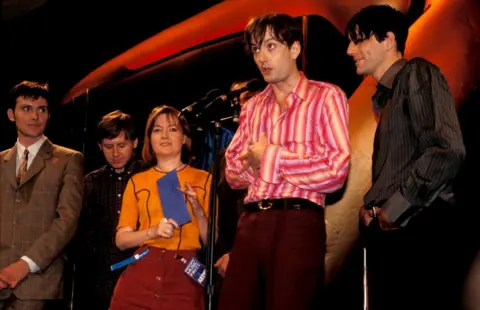
He is not the first artist to contribute his Mercury Prize funds to worthy causes.
Back when Pulp earned the award in the year 1996 for their release Different Class, lead singer the singer announced that the band would donate their winnings to the non-profit War Child.
In 2002, artist Ms Dynamite shared her prize across multiple charities, such as the children's charity and a Sickle Cell charity.
"Additionally, I contributed a grand to the center, to their gymnastics class, because I practiced gymnastics when I was younger and they required updated gear," the artist shared with a publication.
Two years ago, they donated their funds to the local youth club that nurtured their group, in addition to other local music groups.
Also winners that year the group gave their prize to a charity for MS after a close contact was identified with the condition.
"Receiving the award was quite enough," said artist Heather Small. "The cash was the extra but we didn't require the bonus, because we had the honor. So our winning affected somebody else's life."
In the past week, the trust revealed it had saved several small stages in the South East, by placing them under community ownership.
The Joiners in that area and the second in that location were bought under the community ownership program, which is backed by the arts council and music fans who buy "ownership units" in the properties.


